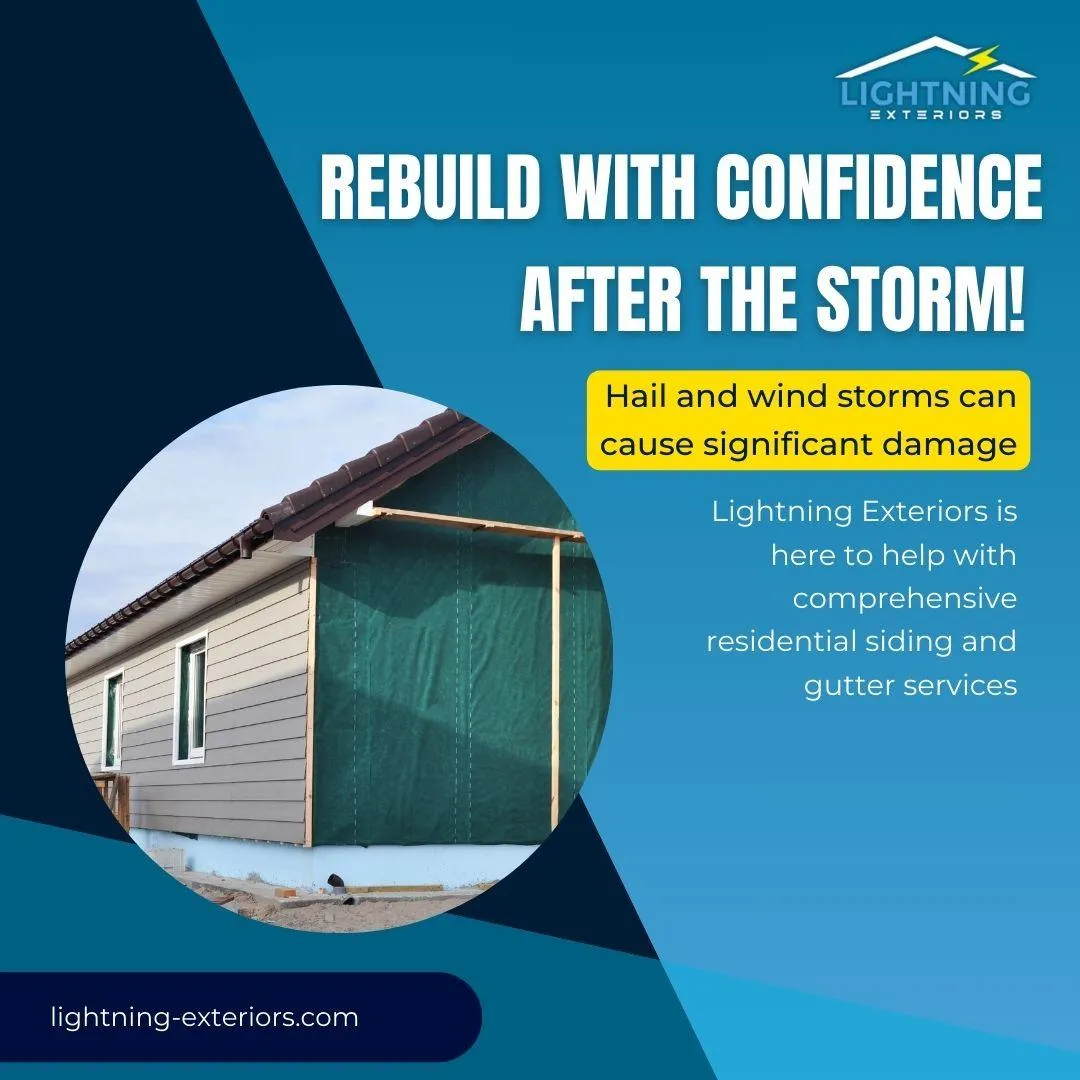
What to Do After Storm Damage: A Step-by-Step Guide
What to Do After Storm Damage: A Step-by-Step Guide
Storms can cause significant damage to your home, leaving you feeling overwhelmed and unsure of where to start. At Lightning Exteriors, we understand the stress of dealing with the aftermath of severe weather. That’s why we’ve put together this step-by-step guide to help you take the right actions after storm damage occurs.

1. Ensure Safety First
Before assessing any damage, prioritize your safety. Check for any hazards such as downed power lines, fallen trees, or structural damage. If your home’s integrity is compromised, it’s best to avoid entering until professionals can assess the situation. If it's safe to do so, turn off gas lines and electricity to prevent further hazards.
2. Document the Damage
Once it’s safe, thoroughly inspect your home for signs of damage. Take detailed photographs and videos of everything, including roofing, siding, windows, and any interior damage caused by water leaks. This documentation will be crucial for your insurance claim. Remember to note anything that seems off or unusual, even if the damage appears minor.
3. Prevent Further Damage
To protect your home from further damage, take temporary measures such as covering broken windows with plastic or tarping any damaged sections of your roof. If possible, move valuable belongings to prevent water damage inside your home. Acting quickly can help minimize additional problems and protect your property until permanent repairs can be made.
4. Contact Your Insurance Company
Notify your insurance provider as soon as possible to start the claims process. Provide them with the photos, videos, and a detailed description of the damage. Your insurance company will likely send an adjuster to inspect the damage and determine coverage. Be sure to keep records of all communications and make sure you understand the terms of your policy.
5. Schedule a Professional Inspection
While insurance adjusters assess damage, it’s equally important to contact a professional roofing and siding contractor like Lightning Exteriors to conduct a thorough inspection. Our team is experienced in identifying storm-related damage that may not be visible to the untrained eye. A professional inspection will give you a comprehensive understanding of what repairs are needed and can provide accurate estimates for your insurance claim.
6. Avoid Scammers and Unlicensed Contractors
Unfortunately, storm damage often attracts contractors who aren’t qualified or licensed, known as "storm chasers." Be cautious when dealing with unknown companies offering to repair your home. Always verify credentials, and choose a local, licensed, and insured contractor like Lightning Exteriors to ensure quality work and accountability.
7. Start Repairs Quickly
Once your insurance claim is approved, schedule repairs promptly to avoid further damage and deterioration. Storm damage can lead to long-term issues such as leaks, mold growth, and structural problems if left unresolved. Whether it’s roof repairs, siding replacement, or gutter fixes, our experienced team at Lightning Exteriors is here to restore your home with top-notch materials and expert craftsmanship.
8. Consider Upgrades
In some cases, storm damage may be an opportunity to improve your home’s resilience against future storms. Upgrading to impact-resistant roofing or installing better-quality siding can add extra protection and value to your property. Our team can recommend upgrades based on your needs and budget.
Conclusion
Storm damage can feel overwhelming, but by taking immediate action and working with professionals, you can restore your home and protect your investment. At Lightning Exteriors, we’re here to guide you through every step of the process—from inspection and documentation to repairs and upgrades. If you’ve experienced storm damage, don’t hesitate to reach out to us for a free consultation and expert advice. Let us help you get your home back to its best shape.


