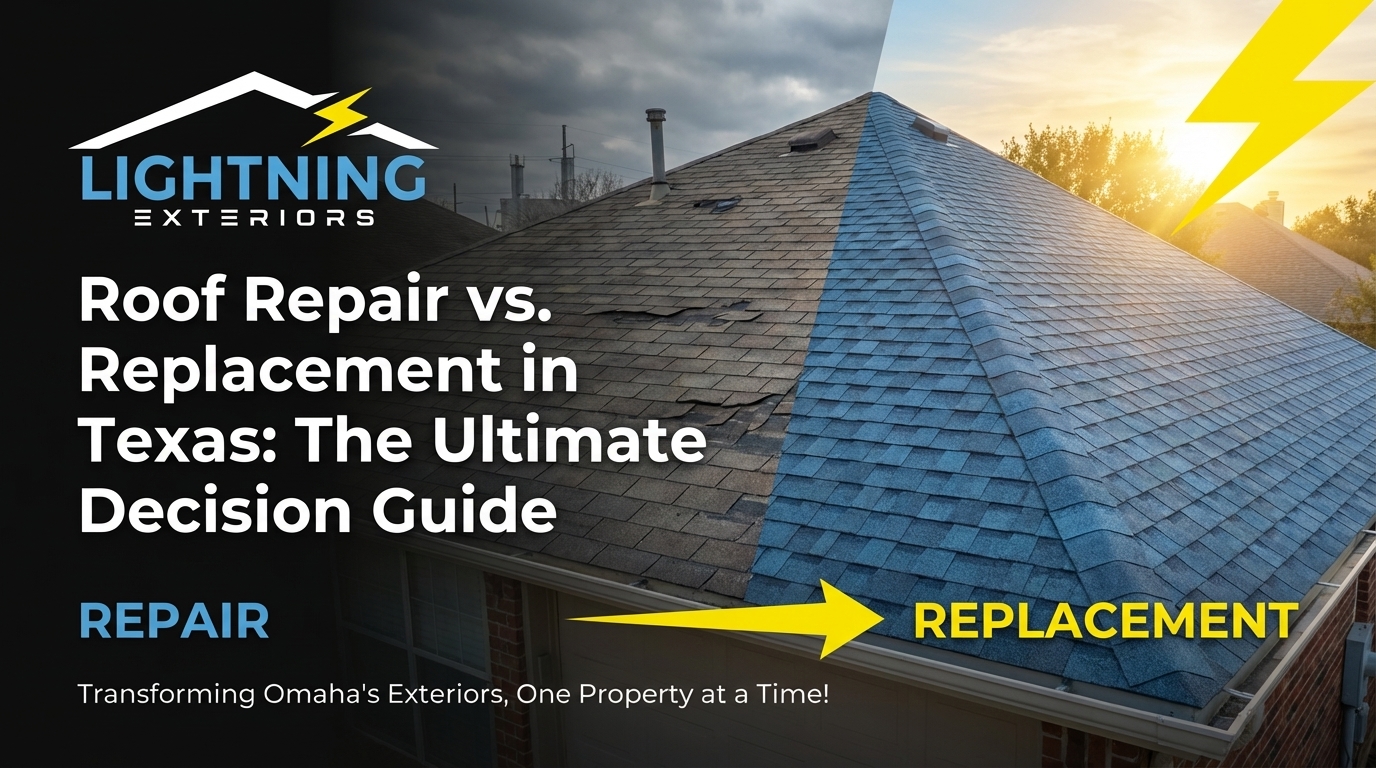
Roof Repair vs. Replacement in Texas: The Ultimate Decision Guide
Roof Repair vs. Replacement: How to Decide in Texas
In Texas, your roof battles more than just the occasional storm; it faces a constant gauntlet of intense UV radiation, thermal shock, and notorious hail seasons. For homeowners in the Lone Star State, a leaking or damaged roof presents a critical financial dilemma: do you patch the problem to save money now, or invest in a full replacement for long-term security?
Making the wrong choice can lead to wasted money on temporary fixes or unnecessary capital expenditure. This guide cuts through the noise to help you make an educated decision specifically for Texas homes, considering local weather patterns, insurance laws like HB2102, and real estate value.
Quick Answer: Repair or Replace?
Deciding between roof repair and replacement in Texas primarily depends on three factors: roof age, the extent of damage, and shingle brittleness. Generally, if your asphalt shingle roof is over 15 years old, has damage affecting more than 30% of the surface area, or fails the "brittle test" due to heat exposure, full replacement is the safer, more cost-effective choice over temporary repairs.
1. Immediate Red Flags: When Repair is Not an Option
Before weighing the pros and cons, you must determine if your roof has already passed the point of no return. In the harsh Texas climate, certain signs indicate that a simple patch job will fail within months.
If you observe widespread curling shingles, significant granule loss (often accumulating in gutters), or bald spots where the fiberglass mat is exposed, the material has likely lost its structural integrity. Inside the home, multiple water stains on ceilings or visible light peeking through attic boards suggest system-wide failure, not just a localized leak.
2. The 'Repair vs. Replace' Decision Matrix
To move beyond guesswork, professional roofers use a decision matrix. Evaluating your roof against these three core factors will clarify the best path forward.
Factor 1: Roof Age vs. Material Lifespan in Texas Climate
While an asphalt shingle roof might be rated for 25 or 30 years in milder climates, Texas heat accelerates aging. A 15-year-old roof in Texas often looks like a 25-year-old roof in the Midwest. If your roof is nearing the 15-year mark, spending money on repairs is often throwing good money after bad. The adhesive strips that seal shingles down degrade over time, making repairs difficult because new shingles won't seal properly to the old, brittle ones.
Factor 2: The Extent of Damage (The 30% Threshold)
Industry standards often cite the 30% Rule: if more than 30% of your roof's total surface area is damaged (whether by hail, wind, or wear), a full replacement is usually more economical per square foot than a massive repair job. Furthermore, extensive repairs can leave your roof looking like a patchwork quilt, which hurts curb appeal.
Factor 3: Financial Considerations (Cost of Patching vs. New System)
Compare the cost of the repair against the remaining lifespan of the roof. If a repair costs $1,500 but only extends the roof's life by 2 years, your annual cost is $750. If a replacement costs $15,000 but lasts 20 years, the annual cost is roughly $750, but with added warranty protection, energy savings, and peace of mind.
3. Texas-Specific Weather Factors: Hail, UV Radiation, and Thermal Shock
Texas roofs face unique environmental stressors that influence the repair vs. replace decision significantly more than in other regions.
- Thermal Shock: Texas temperatures can swing drastically between day and night. This causes roofing materials to expand and contract rapidly. Old, brittle shingles crack under this stress. Repairing a roof that has lost its elasticity is often futile because the surrounding shingles will crack when disturbed during the repair process.
- UV Radiation: The intense sun bakes the oils out of asphalt shingles, leading to the "Brittle Test" failure. If a roofer cannot lift a shingle to slide a new one underneath without the old one snapping, the roof is unrepairable.
- Hail Frequency: Hail impacts bruise the shingle mat, leading to leaks months later. If a storm hits an older roof, the combination of existing brittleness and new impact damage almost always necessitates replacement.
4. The Insurance Reality Check
Insurance plays a massive role in roofing decisions in Texas, perhaps more than any other state due to the frequency of storm claims. Understanding your policy and local laws is critical.
Understanding ACV vs. RCV Coverage
If you have an Actual Cash Value (ACV) policy, your insurer only pays for what the roof is worth today (depreciated value). If you have an older roof, this payout might be small, tempting you to repair. However, if you have Replacement Cost Value (RCV), the insurer pays to replace the roof minus your deductible. RCV policies strongly favor replacement after storm damage.
Texas Law HB2102: Why You Must Pay Your Deductible
It is crucial to understand Texas House Bill 2102, which came into effect in 2019. This law makes it illegal for roofing contractors to waive, absorb, or rebate your insurance deductible. If a roofer offers to "cover your deductible" or giving you a "free roof" via a shady repair invoice, they are committing a crime, and you could be implicated for insurance fraud. Always budget for your deductible when considering a claim-based replacement.
Can You Insure a Patched Roof? (The Risk of Dropped Coverage)
Here is the "Uninsurability Trap": If you choose to patch a roof that is clearly near the end of its life, your insurance carrier may conduct a renewal inspection and decide the roof is too high-risk. They can drop your coverage or exclude the roof from your policy, leaving you completely vulnerable to the next storm. Replacing an aging roof guarantees continued insurability.
5. Energy Efficiency: The Hidden Benefit of Replacement in Texas
One angle often overlooked is the Return on Investment (ROI) regarding energy bills. Old roofs usually lack modern ventilation and reflective technologies.
By replacing your roof, you can install Cool Roofing materials or upgrade your ventilation system (like ridge vents and intake soffits). In Texas, proper attic ventilation and radiant barriers can reduce attic temperatures by up to 30 degrees, significantly lowering the load on your HVAC system. A repair offers zero energy efficiency improvements. Over 10 years, the energy savings from a new "cool roof" can offset a portion of the replacement cost.
6. Impact on Resale Value: What Texas Buyers Expect
The Texas real estate market is competitive. A roof is one of the first things a home inspector checks. A roof with visible patches or one that is clearly nearing the end of its life can be a major negotiation point, often forcing sellers to lower their asking price or pay for a replacement at closing—usually at a higher rush premium.
Conversely, a new roof with a transferable warranty is a powerful selling point that increases buyer confidence and can boost resale value, often recovering a significant percentage of the installation cost upon sale.
Conclusion: A 5-Point Checklist to Make Your Final Decision
If you are still on the fence, run through this final checklist:
- Age: Is the roof over 15 years old? (If yes, lean towards Replace)
- Damage Area: Is more than 30% of the roof damaged? (If yes, Replace)
- Brittleness: Do shingles break when lifted 45 degrees? (If yes, Replace)
- Plans: Are you staying in the home for 5+ years? (If yes, Replace for peace of mind)
- Insurance: Do you have RCV coverage and substantial storm damage? (If yes, Replace)
At Lightning Exteriors, we understand that every home and budget is different. We don't just sell roofs; we provide honest assessments based on data and the specific condition of your property.
Need an Honest Opinion on Your Texas Roof?
Don't guess with your biggest asset. Contact Lightning Exteriors today for a comprehensive inspection. We'll give you a clear, transparent assessment of whether a repair will hold or if it's time for a new system.


