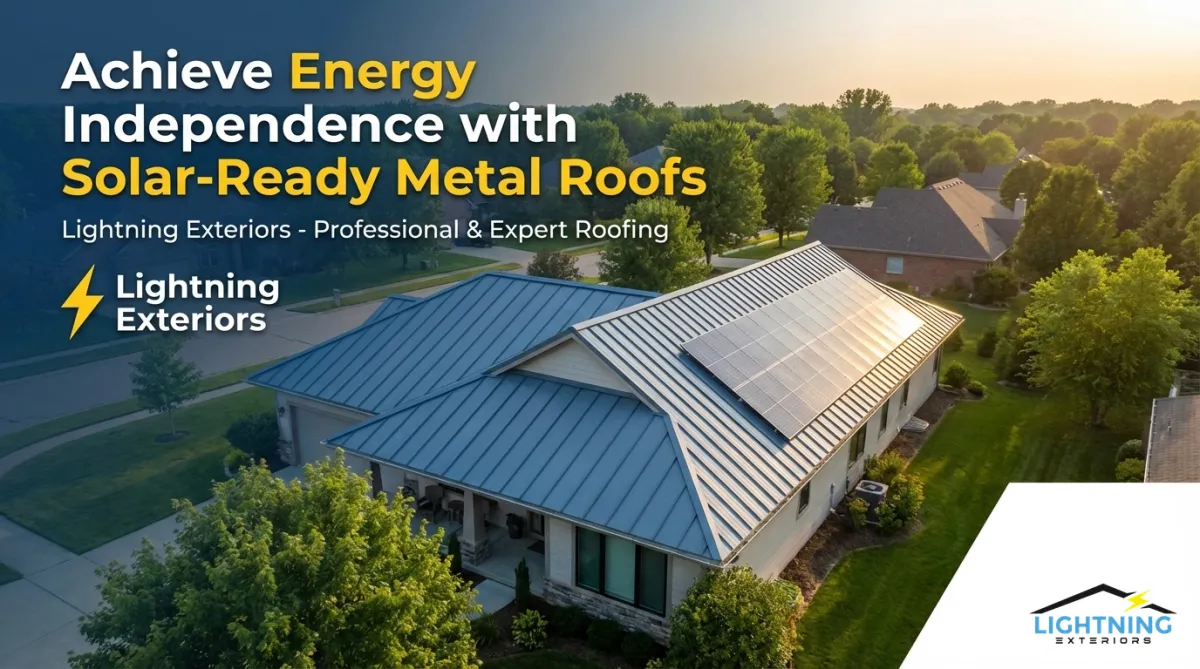
Achieve Energy Independence with Solar-Ready Metal Roofs
Energy Independence: The Rise of Solar-Ready Metal Roofs
The pursuit of energy independence has shifted from a niche environmental goal to a mainstream financial strategy for homeowners. As utility rates climb and grid reliability fluctuates, property owners are looking for ways to generate their own power. However, the secret to a successful solar installation isn't just in the panels themselves; it is in the substrate they sit upon. A solar-ready metal roof represents the pinnacle of modern building science, providing the only structural foundation that can outlast and outperform the technology it supports.
What is a Solar-Ready Metal Roof?
A solar-ready metal roof is a high-durability roofing system—typically standing seam—designed with the structural integrity, electrical preparation, and mounting hardware compatibility to host a photovoltaic (PV) array for 30 to 50 years without requiring roof replacement or penetrations that compromise the building envelope.
1. Introduction: Defining Energy Independence in the 21st Century
Energy independence is no longer just about being "off the grid." In the 21st century, it refers to the ability of a homeowner to generate, store, and manage their own power while minimizing reliance on external utility providers. This shift is driven by a combination of rising electricity costs, a desire for sustainable living, and the increasing frequency of extreme weather events that can cause long-term power outages. For homeowners in Omaha and across Texas, where storms can be severe, the resilience of the energy source is as important as the source itself.
The rise of solar technology has been rapid, but many homeowners make the mistake of focusing solely on the panels. They often overlook the most critical component of the system: the roof. A roof that is not "solar-ready" can lead to catastrophic financial losses down the road, especially if the roofing material reaches the end of its life while the solar panels are still in their prime. This is where metal roofing changes the equation, offering a platform that matches the tech's lifespan.
When we talk about being solar-ready, we are talking about future-proofing. It means installing a roof today that is specifically engineered to handle the mechanical and thermal stresses of a solar array tomorrow. By choosing a metal system, homeowners are not just buying a shelter; they are investing in a power plant foundation that will provide security and savings for the next half-century.
2. The Structural Foundation: Why Metal is the Only 'Solar-Ready' Substrate
The Superiority of Standing Seams
The primary reason metal is considered the only true solar-ready substrate is the "standing seam" design. Unlike traditional roofs that rely on thousands of nails or screws driven through the surface, standing seam metal roofs feature raised ribs that interlock. These seams provide a convenient, ultra-strong attachment point for solar panels. Because the panels are clamped to the seams rather than bolted through the roof, the risk of leaks is virtually eliminated. This structural advantage is unmatched by any other roofing material on the market today.
Weight-Bearing Capacity and Structural Integrity
Solar arrays add significant weight to a roof—roughly 2 to 4 pounds per square foot. Metal roofs are inherently lightweight yet incredibly strong. When a contractor builds a "solar-ready" metal roof, they ensure the underlying decking and trusses are prepared for this dead load. Furthermore, metal doesn't become brittle with age like asphalt. An asphalt shingle roof loses its structural integrity as it sheds granules and dries out, whereas a Galvalume or Aluminum roof remains rigid, providing a stable platform for heavy solar glass and framing.
Specific Metal Alloy Performance
Not all metal roofs are created equal. For solar applications, Galvalume (a steel substrate coated with aluminum and zinc) is often preferred for its exceptional corrosion resistance and high strength-to-weight ratio. Aluminum is another excellent choice, particularly in coastal regions where salt air is a factor, as it is naturally resistant to rust. Copper, while beautiful and extremely long-lasting, requires specialized mounting to avoid galvanic corrosion, but it can still serve as a solar-ready substrate for luxury applications. Choosing the right alloy ensures that the metal won't react negatively to the heat generated by the solar array over decades of exposure.
3. Solving the Longevity Gap: Why Asphalt Shingles Cripple Solar ROI
The Hidden Costs of Asphalt Shingles
The biggest mistake in residential solar is installing expensive, 25-year-warrantied panels on a 15-year-old asphalt shingle roof. Asphalt shingles have an average real-world lifespan of 15 to 20 years. Solar panels, however, are designed to produce power for 25 to 30 years or more. If the roof fails while the panels are still functional, the homeowner is forced into a costly "Remove and Reinstall" (R&R) cycle. This process involves hiring a solar company to decommission the system, remove the panels, store them, hire a roofer to replace the shingles, and then hire the solar company again to reinstall everything.
Aligning Lifespans for Maximum Value
A metal roof lasts 40 to 70 years, easily outliving the solar panels it supports. When the solar panels eventually reach their end-of-life and need to be replaced with newer, more efficient technology in 30 years, the metal roof will still be in excellent condition. This alignment of lifespans is the foundation of true energy independence. You only pay for the installation once, ensuring that the energy savings generated by the panels aren't wiped out by the labor costs of an emergency roof replacement mid-cycle.
Risk of Damage During Installation
Installing solar on asphalt requires hundreds of penetrations into the roof deck. Each penetration is a potential leak point. Furthermore, the foot traffic required to install the racking can damage the granules on asphalt shingles, accelerating their decay. Metal roofs, especially standing seam systems with non-penetrating clamps, are not subject to this degradation. The installers can move across the roof without causing the same level of wear and tear, preserving the integrity of your home's first line of defense.
4. The Technology of Connection: Non-Penetrating Clamps and Roof Integrity
S-5! Clamps: The Industry Standard
One of the most revolutionary advancements in solar-ready roofing is the non-penetrating attachment clamp, most notably those manufactured by S-5!. These clamps grip the standing seam of the metal roof with incredible force without ever piercing the metal. This means the waterproof integrity of the roof remains 100% intact. For a homeowner, this is the ultimate peace of mind; you can have a massive energy-generating array on your roof without a single hole being drilled into your house.
Preserving Your Roof Warranty
Many roofing warranties are voided the moment a third-party contractor drills holes into the material to install solar racking. Because solar-ready metal roofs utilize non-penetrating clamps, the original roof warranty often remains fully intact. Lightning Exteriors works closely with homeowners to ensure that the solar installation complies with the roof manufacturer's specifications, maintaining your protection against material defects while you enjoy the benefits of solar power.
Flexibility and Future Adjustments
Another advantage of clamp-on technology is the ease of adjustment. As solar technology evolves, panels may change in size or configuration. On a traditional roof, changing the layout of your solar array means patching old holes and drilling new ones. On a standing seam metal roof, you simply loosen the clamps and slide them to their new positions. This adaptability makes the metal roof a truly "dynamic" platform that can grow and change along with your energy needs.
5. Thermodynamics of Solar: How Reflective Metal Boosts Photovoltaic Output
The Cool Roof Advantage
Metal roofs are inherently "cool roofs" because they reflect a high percentage of solar radiation back into the atmosphere. This is measured by the Solar Reflectance Index (SRI). While asphalt shingles absorb heat and can reach temperatures of 160°F, a reflective metal roof stays significantly cooler. Why does this matter for solar? Photovoltaic panels actually become less efficient as they get hotter. By keeping the ambient temperature lower around the panels, a metal roof helps the solar system maintain peak efficiency during the hottest parts of the day.
Bifacial Panels and the Albedo Effect
The next generation of solar technology involves "bifacial" panels, which can generate electricity from both the front and the back. These panels capture sunlight that reflects off the roof surface. A light-colored or highly reflective metal roof creates a powerful "albedo effect," bouncing light onto the underside of the panels. This can increase total energy production by up to 10-15% compared to panels installed on a dark, non-reflective surface like asphalt.
The Convective Cooling Flue
The way solar panels are mounted on standing seams creates a natural air gap between the panels and the metal surface. This gap acts as a convective flue, allowing air to flow freely underneath the panels. This constant airflow dissipates heat more effectively than on a shingle roof where panels often sit closer to the surface. This thermal management not only boosts energy output but also extends the life of the sensitive electronics within the solar panels themselves.
6. The 'Solar-Ready' Checklist: What to Ask Your Contractor Before You Build
Being "solar-ready" is a proactive choice made during the roofing installation. If you are replacing your roof now but plan to add solar in two or three years, you need to ensure the following steps are taken. Failure to do so could result in extra costs later when the solar installers arrive. At Lightning Exteriors, we help homeowners navigate this checklist to ensure their roof is a turnkey platform for energy production.
- Structural Bracing: Has the roof deck been reinforced to handle the specific load of solar panels? This is especially important in areas with high snow loads or hurricane-force winds.
- Dedicated Conduit Paths: Have you installed "stub-outs" or dedicated conduit runs from the attic to the roof surface? Pre-installing these prevents the need to run unsightly pipes across your new metal roof later.
- Electrical Panel Capacity: Is your current electrical panel capable of handling a solar input breaker? It is often cheaper to upgrade your panel during a roof renovation than as a standalone project.
- Seam Height and Spacing: Are the seams on your metal roof spaced correctly for standard solar racking systems? 16-inch or 24-inch spacing is typical, but verifying this with your solar provider is key.
- Flashing for Inverters: If you plan on using string inverters, is there a designated, shaded spot on the exterior wall near the meter that is already flashed and ready for wiring?
Additionally, consider the orientation of your roof. While a solar-ready roof can be installed on any slope, maximizing the south-facing surface area is ideal for energy production. A professional contractor will help you evaluate shading from nearby trees or chimneys that could impact your future PV system's performance.
7. Economic Analysis: Comparing the 50-Year Lifecycle Cost of Solar-on-Metal vs. Shingles
Initial Investment vs. Long-Term ROI
It is no secret that a metal roof has a higher upfront cost than asphalt shingles. However, when viewed through the lens of a 50-year lifecycle, the metal roof is significantly cheaper. When you factor in the cost of 2-3 shingle replacements over that same period—plus the added R&R costs for the solar panels each time—the metal roof pays for itself twice over. True energy independence requires looking past the first check you write and analyzing the total cost of ownership.
Incentives and the Inflation Reduction Act
Under the Residential Clean Energy Credit (part of the Inflation Reduction Act), homeowners can claim a 30% tax credit for solar systems. While the credit typically doesn't apply to the entire roof, it does apply to the solar-specific components and, in some cases, the structural reinforcements required to support the panels. This incentive significantly accelerates the Return on Investment (ROI) for a solar-ready metal system.
Lifespan 15-20 Years 50-70 Years Mounting Method Penetrating (Holes) Non-Penetrating (Clamps) Efficiency Boost None (Heat Absorption) High (Reflective Cooling) 50-Year Cost High (Multiple Replacements) Lowest (One-time Install)Insurance Savings and Property Value
A solar-ready metal roof can also lower your insurance premiums. Many metal roofs carry a Class 4 Impact Rating, the highest rating for hail resistance. Insurance companies in hail-prone areas like Omaha and Texas often offer significant discounts for these roofs. Furthermore, a home with a paid-off solar system and a lifetime roof has a much higher resale value and curb appeal. Potential buyers see a house with no upcoming maintenance costs and virtually no power bills—a winning combination in any real estate market.
8. Beyond the Panels: Preparing Your Metal Roof for Battery Storage and Micro-grids
Battery Storage Integration
True energy independence isn't just about generation; it's about storage. Home battery systems, like the Tesla Powerwall or Enphase IQ, allow you to store excess solar energy produced during the day for use at night or during an outage. A solar-ready metal roof provides the perfect infrastructure for these systems. When your roof is designed with solar in mind, the wiring paths for battery storage can be integrated into the initial electrical design, making the installation of a battery backup seamless and aesthetically clean.
Creating a Resilient Home Micro-grid
A micro-grid is a localized group of electricity sources that can operate independently of the main grid. By combining a metal roof's storm resilience with solar generation and battery storage, you create a home that can withstand long-term infrastructure failures. During a hurricane or a severe winter storm, while neighbors may be without power for weeks, a home with a solar-integrated metal roof remains powered and protected. This is the ultimate form of self-sufficiency and security for your family.
Smart Energy Management
Modern solar-ready systems often include smart energy management tools. These systems allow you to monitor your roof's energy production in real-time and even direct power to specific appliances during an outage. The metal roof serves as the physical shield for these sensitive electronic components, ensuring that your home's "brain" stays safe from the elements while it manages your energy independence.
9. Environmental Stewardship: The Zero-Waste Lifecycle of Metal and Solar
Recyclability and Cradle-to-Cradle Design
One of the most compelling arguments for solar-ready metal roofs is their environmental impact. Asphalt shingles contribute billions of pounds of waste to landfills every year. In contrast, metal roofing is 100% recyclable at the end of its long life. In many cases, new metal roofs are made from 25-35% recycled content. When you pair this with solar panels—which are also becoming increasingly recyclable—you are choosing a truly sustainable, zero-waste path for your home's exterior.
Reducing Carbon Footprint
The combination of local energy generation and a sustainable roofing material drastically reduces a home's carbon footprint. By generating your own power, you reduce the demand for fossil-fuel-burning power plants. By choosing a metal roof, you eliminate the carbon emissions associated with the frequent manufacturing, transportation, and installation of short-lived asphalt shingles. It is a dual-layered approach to environmental stewardship that pays dividends for both the planet and your wallet.
10. Conclusion: Future-Proofing Your Home for Total Energy Autonomy
The rise of solar-ready metal roofs is more than just a construction trend; it is a fundamental shift in how we view residential infrastructure. No longer is the roof simply a passive covering to keep the rain out. Today, it is an active, energy-generating asset that provides the foundation for total energy autonomy. By choosing a metal roof prepared for solar, you are making a decision that will protect your home, boost your energy efficiency, and provide financial security for decades to come.
Whether you are ready to install solar panels today or you want to keep your options open for the future, a standing seam metal roof is the only choice that makes sense. It eliminates the risks of leaks, avoids the high costs of future roof replacements, and maximizes the efficiency of your solar technology. At Lightning Exteriors, we specialize in building these high-performance systems for homeowners who demand the best in craftsmanship and technology.
Ready to Future-Proof Your Home?
Lightning Exteriors offers expert metal roofing solutions designed for energy independence. From residential roofing to specialized solar-ready systems, we deliver precision and care to protect your investment.
Visit Our Homepage


