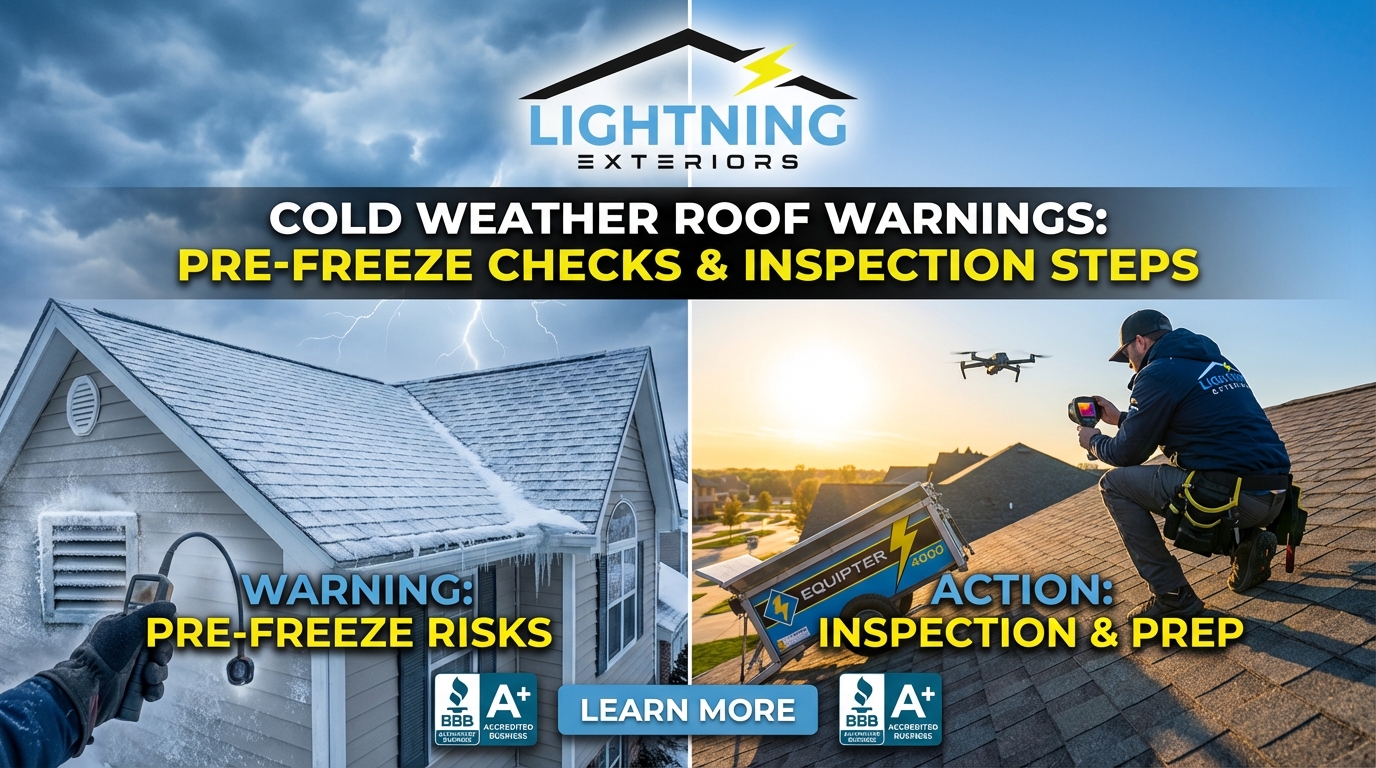
Cold Weather Roof Warnings: Pre-Freeze Checks & Inspection Steps
Cold Weather Roof Warnings: What Homeowners Should Check Before the Freeze — and the Inspection Steps That Can Save Thousands After
As the seasons shift and the vibrant colors of autumn give way to the stark greys of winter, homeowners in the Midwest and Texas face a familiar, albeit stressful, transition. The temperature drops, the wind picks up, and the threat of freezing precipitation looms on the horizon. While many of us are busy winterizing our sprinklers or digging our heavy coats out of storage, the most critical component of our home’s defense system—the roof—often goes unnoticed until it’s too late. The reality is that cold weather imposes a unique set of physical stresses on your roofing system that are fundamentally different from summer heat or spring rains.
Ignoring your roof before the first deep freeze is akin to driving a car with bald tires on an icy highway; you might make it to your destination, but the risk of a catastrophic failure increases exponentially. Winter damage is rarely silent. It announces itself with dripping ceilings, ice dams that tear down gutters, and energy bills that skyrocket as heat escapes through compromised insulation. However, the most insidious damage often occurs silently during the freeze-thaw cycles, only revealing itself when the spring rains arrive and you suddenly find yourself needing a bucket in the living room.
At Lightning Exteriors, we have spent over 40 years witnessing the havoc that winter can wreak on unprepared homes. We understand that a roof is a significant investment, and protecting that investment requires proactive maintenance rather than reactive repairs. This comprehensive guide is designed to walk you through the essential pre-freeze checks you must perform to secure your home, as well as the professional inspection steps required after severe weather to ensure your roof remains watertight and durable for years to come.
Why Winter is Your Roof’s Worst Enemy: Understanding the Freeze-Thaw Cycle
To understand why winter inspections are non-negotiable, you first need to understand the physics of water and temperature. The "freeze-thaw cycle" is a term often thrown around in the roofing industry, but its implications are severe. When water freezes, it expands by approximately 9% in volume. If moisture has penetrated a small crack in your shingles, a gap in your flashing, or the porous surface of a chimney brick, that expansion exerts tremendous pressure on the surrounding material. It acts like a slow-motion wedge, driving cracks wider and compromising the structural integrity of the materials meant to keep your home dry.
In regions like the Midwest and Texas, where temperatures can fluctuate wildly between day and night, this cycle can happen dozens of times in a single season. During the day, the sun might melt snow or ice, turning it into water that seeps into microscopic crevices. When the temperature plummets at night, that water refreezes and expands. Over time, this repetitive stress causes what is known as "thermal shock." Roofing materials, particularly asphalt shingles, expand and contract with temperature changes. As they age, they lose their elasticity, making them more prone to cracking and splitting under these thermal stresses.
Furthermore, the weight of accumulated snow and ice adds a static load to your roof structure that it must support for extended periods. While modern building codes account for snow loads, an aging roof with weakened decking or structural issues may struggle to bear the weight, leading to sagging or, in extreme cases, collapse. The combination of thermal shock, ice expansion, and heavy static loads creates a perfect storm of potential failure points that must be identified and addressed before winter fully sets in.
Quick Answer: Why Inspect Before the Freeze?
The primary goal of a pre-freeze inspection is to identify and seal water entry points before the freeze-thaw cycle exacerbates them. Small cracks in shingles or gaps in flashing can be minor repairs in autumn but turn into major leaks once ice expands within them. Homeowners should specifically check for gutter blockages that cause ice dams, lifted shingles that allow wind-driven snow entry, and attic insulation gaps that contribute to heat loss and roof deck warping.
Interior Warning Signs: What Your Attic is Telling You
Many homeowners believe that a roof inspection begins on a ladder, but the most telling clues are often found inside your home, specifically in the attic. Your attic serves as the buffer zone between the conditioned living space below and the harsh elements above. Before you ever step foot outside, grab a flashlight and head up to the attic. The condition of your insulation and ventilation plays a massive role in how your roof handles cold weather. If your attic is poorly insulated, heat from your home escapes and warms the underside of the roof deck, melting snow that then runs down to the cold eaves and refreezes—the classic recipe for ice dams.
Look for signs of moisture on the underside of the roof sheathing (the wood boards your shingles are nailed to). Dark stains, rusted nails, or visible mold growth are clear indicators that moisture is not escaping properly or is leaking in from above. In the winter, this trapped moisture can freeze, creating frost on the underside of the roof. When that frost melts, it rains down on your insulation, rendering it less effective and potentially causing ceiling stains in the rooms below. Proper ventilation—a balance of intake at the soffits and exhaust at the ridge—is crucial to keep the attic temperature close to the outside temperature, preventing this cycle.
Additionally, check for daylight peering through the roof boards. While it might seem obvious, seeing sunlight means there is a direct path for wind-driven snow to enter. In a blizzard, fine snow particles can be blown through incredibly small gaps, accumulating in your attic and causing water damage when they eventually melt. Sealing these gaps and ensuring your insulation is evenly distributed (no bare spots!) is your first line of defense against winter's bite.
The Exterior Pre-Freeze Checklist: 5 Critical Areas to Inspect
1. Shingle Integrity and Adhesion
Your shingles are the armor of your home. Before the freeze, you need to ensure this armor is intact. Look for shingles that are curling, buckling, or missing entirely. Cold weather makes asphalt shingles brittle; if they are already loose or damaged, strong winter winds can easily rip them off, exposing the underlayment. Pay special attention to the sealant strip on the underside of the shingles. If this seal has failed, the shingle will flap in the wind, eventually breaking off. A professional roofer can reseal these loose shingles to ensure they stay put during winter storms.
2. Flashing Around Penetrations
Roof penetrations—chimneys, vent pipes, skylights, and exhaust fans—are the most common sources of leaks. These areas rely on metal flashing to bridge the gap between the roof deck and the penetration. Over time, the caulk or sealant used with flashing can dry out and crack. Before the freeze, examine these areas closely. Is the metal rusted? is the caulk pulling away? Any gap here will invite water in, which will then freeze and pry the flashing further apart. Re-caulking these areas with a high-quality, weather-resistant sealant is a cost-effective maintenance step that can save you thousands in water damage repairs.
3. Gutter Health and Alignment
Gutters are your roof's drainage system. If they are clogged with autumn leaves, pine needles, or debris, water cannot escape. When temperatures drop, this standing water turns into a heavy block of ice that can pull the gutters away from the fascia board. Furthermore, clogged gutters are the primary catalyst for ice dams. Ensure your gutters are cleaned thoroughly and that they are securely fastened to the house. Check the downspouts to make sure water is being diverted at least 5-10 feet away from your foundation to prevent basement flooding during the thaw.
4. Valley Clearances
Roof valleys—where two roof planes meet—channel a high volume of water. These areas are prone to collecting debris, which acts like a dam, slowing water flow and allowing it to back up under the shingles. In winter, this is a disaster waiting to happen. Ensure all valleys are completely clear of leaves and branches. If you have open metal valleys, check for rust or loose fasteners. If you have woven shingle valleys, look for any signs of cracking along the center line where the shingles are bent.
5. Tree Limbs and Overhangs
Overhanging tree limbs are a major threat during winter. The weight of snow and ice can cause branches to snap and crash onto your roof, causing severe structural damage. Even if they don't break, wind can cause branches to scrape against the roof surface, stripping away the protective granules from your shingles. Trim back any branches that hang over your roof to create a safety perimeter. This also reduces the amount of debris falling into your gutters and discourages squirrels and raccoons from using your roof as a winter shelter.
The Ice Dam Phenomenon: How to Spot and Stop It
Ice dams are perhaps the most notorious winter roofing problem, and they are almost entirely preventable with the right preparation. An ice dam forms when the roof over the attic is warm enough to melt snow, but the roof edge (the eave) is cold enough to freeze it. The water runs down the roof, hits the cold edge, freezes, and forms a rim of ice. As this cycle continues, the rim grows into a dam, trapping a pool of water behind it. Since shingles are designed to shed water downward, not hold standing water, this pool eventually seeps up under the shingles and leaks into the home.
Spotting an ice dam is relatively easy—look for massive icicles hanging from your gutters or eaves. While they may look picturesque, they are a sign of trouble. You might also see water stains along the intersection of your wall and ceiling inside the house. Stopping them requires a two-pronged approach: managing attic heat and keeping gutters clear. If you frequently suffer from ice dams, it is a clear signal that your attic insulation and ventilation need a professional assessment. In the short term, safely removing snow from the edge of the roof using a roof rake (from the ground!) can help prevent the dam from forming, but be extremely careful not to damage the shingles in the process.
Winter Storm Damage: Immediate Steps After the Snow Clears
Once the storm has passed and the immediate danger is over, the work isn't done. The period immediately following a winter storm is critical for assessing damage. First and foremost, assess from the ground. Do not climb on a snowy or icy roof; it is incredibly dangerous. Use binoculars to scan for missing shingles, damaged flashing, or dented vents. Look for granules in the downspout splash blocks—an excessive amount indicates that the ice may have scoured the surface of your shingles.
If you suspect damage, document everything. Take photos of the roof from the ground, photograph any interior leaks, and keep a record of the dates and times of the storm. This documentation is vital for insurance claims. Many homeowners make the mistake of waiting until spring to check for damage, but by then, the evidence (like storm-specific patterns) may have faded, or subsequent rains may have caused further, uninsured damage due to negligence. Acting fast allows you to perform temporary repairs, like tarping, to protect the home until a permanent fix can be made.
Another critical post-storm check is for hail impact. Winter storms in the Midwest and Texas can sometimes bring hail. Hail hits on cold, brittle shingles can cause them to fracture or "bruise." These bruises might not be immediately visible to the untrained eye but will lead to premature failure. A professional inspection is usually required to identify this type of damage, as it often involves looking for subtle depressions and granule loss patterns that signify the shingle's fiberglass mat has been compromised.
The Lightning Exteriors 360° Winter-Proof Protocol
At Lightning Exteriors, we don't just look at your roof; we analyze the entire exterior ecosystem of your home. Our unique 360° Winter-Proof Protocol is a methodology developed over four decades of handling Midwest and Texas winters. Unlike a standard "spot check" that many contractors offer, our protocol involves a comprehensive analysis of the thermal and structural performance of your roofing system. We start with the intake ventilation at the soffits, verifying that airflow is unobstructed to prevent attic overheating. We then move to the attic interior, using thermal imaging cameras to identify heat leaks that the naked eye misses—often spotting missing insulation bats or unsealed can lights that contribute to ice dams.
From there, our inspection moves to the roof surface. We don't just look for missing shingles; we test the sealant adhesion on the perimeter shingles, which are the first to fail in high winds. We inspect the integrity of the flashing systems, knowing that the expansion and contraction of metal in winter is a primary leak source. Finally, we assess the gutter system's load-bearing capacity, ensuring it can handle the weight of ice and snow without detaching from the fascia. This holistic approach ensures that we aren't just fixing a symptom (like a leak) but curing the disease (the structural or thermal imbalance causing the leak).
We also provide homeowners with a detailed "Roof Health Report Card" after our inspection. This document categorizes issues into "Immediate Action Required," "Monitor for Spring," and "Long-Term Maintenance." This transparency empowers you to make informed decisions about your budget and your home's safety, rather than being pressured into unnecessary repairs. It's this level of detail and care that has earned us our Platinum Preferred status and the trust of thousands of homeowners.
Cost Analysis: Prevention vs. Cure
It is a common misconception that professional roof inspections are an unnecessary expense. However, when you weigh the cost of a preventative maintenance visit against the cost of emergency winter repairs, the math is undeniable. A minor repair to reseal flashing or replace a few wind-damaged shingles might cost a few hundred dollars. In contrast, an ignored leak that leads to a burst pipe, soaked insulation, dry rot in the decking, and ruined drywall can easily run into the tens of thousands of dollars—not to mention the potential for mold remediation costs.
Furthermore, most insurance policies have clauses regarding "negligence." If a leak is determined to be the result of long-term lack of maintenance rather than a sudden storm event, your claim could be denied. By having regular, documented inspections by a licensed professional like Lightning Exteriors, you create a paper trail of diligence that can be invaluable during an insurance claim dispute. Investing in your roof's health before the freeze is not spending money; it's saving it. It extends the lifespan of your roof, maintains your home's energy efficiency, and provides the priceless peace of mind that your family is safe and dry, no matter what the winter weather brings.
Key Takeaways: Your Winter Defense Strategy
- The Freeze-Thaw Threat: Water expansion can turn minor cracks into major leaks. Address small issues immediately.
- Attic Inspection: Check for proper insulation and ventilation to prevent heat loss and ice dams.
- Gutter Maintenance: Clean and secure gutters are your best defense against ice accumulation and water backup.
- Safety First: Never climb a snowy roof. Use binoculars for ground inspections and call professionals for close-up looks.
- Professional Advantage: Expert inspections use tools like thermal imaging to find hidden issues and provide documentation for insurance.
Don't wait for the first drip to tell you something is wrong. The cold is coming, but with the right preparation, your home can handle it.
Ready to Winter-Proof Your Home?
Don't let the next freeze catch you off guard. Whether you need a pre-winter checkup or emergency storm restoration, Lightning Exteriors is here to help. Our Platinum Preferred team is ready to inspect, repair, and protect your home with the expertise you deserve.


